





Q&A with Dr. Ken Zanzalari, Ph.D., PAS, Dipl. ACAN
Director, Global Dairy Technical Services, Phibro Animal Health
The importance of effectively transitioning cows from late pregnancy into lactation is one of the golden principles of dairy farming. No one questions its importance or the effort that should be put forth to ensure cows remain healthy through the critical first three weeks of lactation and to prepare them to produce milk up to their genetic potential.
Arguably, no disorders deserve more attention than milk fever (MF) and subclinical hypocalcemia (SCH). The sudden large demand for calcium to support colostrogenesis and early lactation milk synthesis places enormous strain on the mechanisms of calcium metabolism. Effectively implementing a program to minimize the incidence of hypocalcemia is one of the most common feeding and management practices on dairy farms, and for good reason. No program has been more researched or more effective in helping to reduce the incidence of hypocalcemia than the feeding of a prepartum acidogenic diet. Meta-analyses have shown that acidogenic diets and alkaline diets with lowered DCAD levels reduce the risk of metritis and retained placentas and improve postpartum DMI and milk yield. In addition, acidogenic diets have been shown to reduce days open and increase the likelihood
of becoming pregnant at first AI.
Dr. Ken Zanzalari, Ph.D., PAS, Dipl. ACAN, Director of Global Dairy Technical Services for Phibro Animal Health Corporation, answers commonly asked questions regarding the feeding of a fully acidogenic diet to help maximize the performance potential of transition cows.
Q: What is DCAD, and what is a DCAD diet?
Dietary Cation-Anion Difference (DCAD) is the measure of the milliequivalent difference between positively charged minerals, or cations (predominantly sodium and potassium), in relation to the negatively charged minerals, or anions (predominantly chloride and sulfur), in a diet. A DCAD diet can be either positive or negative, depending on the concentration of different minerals in the feed.
For example, a positive DCAD diet has a high concentration of positively charged minerals, or cations, in relation to negatively charged minerals while a negative DCAD diet has a higher concentration of negatively charged minerals, or anions, in relation to positively charged minerals.
Q: Are negative DCAD diets safe for my cows?
Yes, negative DCAD diets are safe, but like any other nutritional intervention, properly formulating, feeding and managing a negative DCAD diet is recommended to obtain the most benefits from the program. When dairy cows are underfed a negative DCAD diet, the effect on the mechanisms of calcium metabolism results in a program that typically does not produce the expected benefits. Conversely, when a negative DCAD diet is overfed, there is potential for over-acidification, often leading to reduced DMI. Both of these scenarios should be avoided.
Q: How does a negative DCAD diet work?
Feeding a negative DCAD diet places the cow in a physiological state called compensated metabolic
acidosis, a state in which the cow’s body successfully maintains a slightly lower-than-normal level of blood pH balance. To maintain normal blood pH, urine pH is lowered into the acidic range as the cow excretes excess hydrogen ions through this mechanism. The slight lowering of blood pH positively alters calcium metabolism, enabling the cow to absorb more dietary calcium and release stored calcium from bone. Together, these two mechanisms enhance calcium flux (movement of calcium through the available calcium pool), enabling her to partially mitigate the significant deficit of calcium around the time of calving.
Q: What is a fully acidogenic diet?
A fully acidogenic diet is generally accepted to be a diet which results in urine pH within a range of 5.5 to 6.0. This differs from a partially acidogenic diet, which is generally accepted to result in urine pH ranging from 6.1 to 6.9.
Q: Why feed a fully acidogenic diet instead of a partially acidogenic diet?
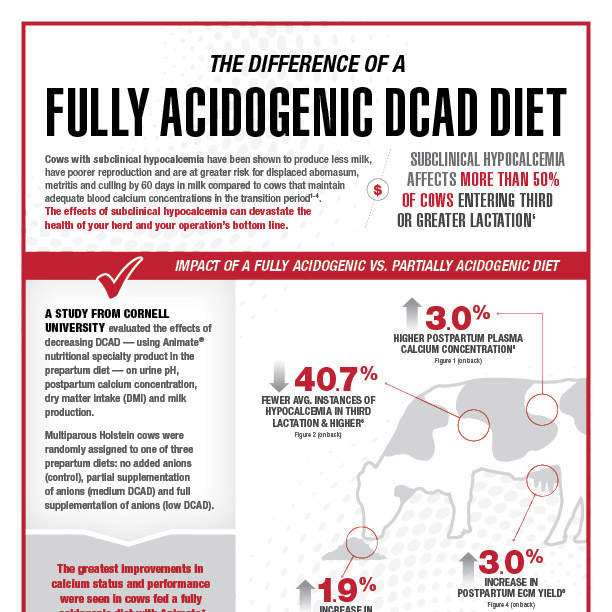
Feeding a fully acidogenic diet helps lead to improved calcium metabolism. Research from Cornell University demonstrated that cows fed a fully acidogenic diet had significantly greater prepartum excretion of urinary calcium (greater calcium flux) than cows fed a partially acidogenic diet. As a result, cows fed the fully acidogenic diet had greater postpartum plasma calcium concentrations, postpartum DMI and milk yield.
Q: Will a fully acidogenic diet over-acidify
my cows?
No! Studies investigating the effects of fully acidogenic diets have demonstrated that the level of systemic acidification as measured by urine pH,5 blood pH,5 blood concentrations of bicarbonate6,7 and urine ammonium concentrations8 was within the normal range for these metabolic parameters.
Q: Will feeding a fully acidogenic diet affect
feed intake?
Depends. Two things that need to be considered are the source of anions and the level of the individual anions included in the diet. Commercially manufactured anionic supplements are generally more palatable than diets formulated with individual straight salts, but not all commercially manufactured supplements are equally palatable and effective. Additionally, feeding the proper concentrations of chloride and sulfur may help to reduce the negative effects of acidogenic diets on dry matter intake. To support these statements, research has shown that the feeding of fully acidogenic diets does not always result in decreases in prepartum DMI.
Q: How do I know if cows are responding correctly to a fully acidogenic diet?
There is one very simple way to determine if a fully acidogenic diet is being fed and managed properly: a cow-side urine pH test. Urine pH testing has been shown to provide immediate and reliable feedback on the level of metabolic acidosis and on the effectiveness of diet implementation, providing a guide for potential changes in diet formulation and feeding management.
Q: What other factors can impact the success of feeding a negative DCAD diet?
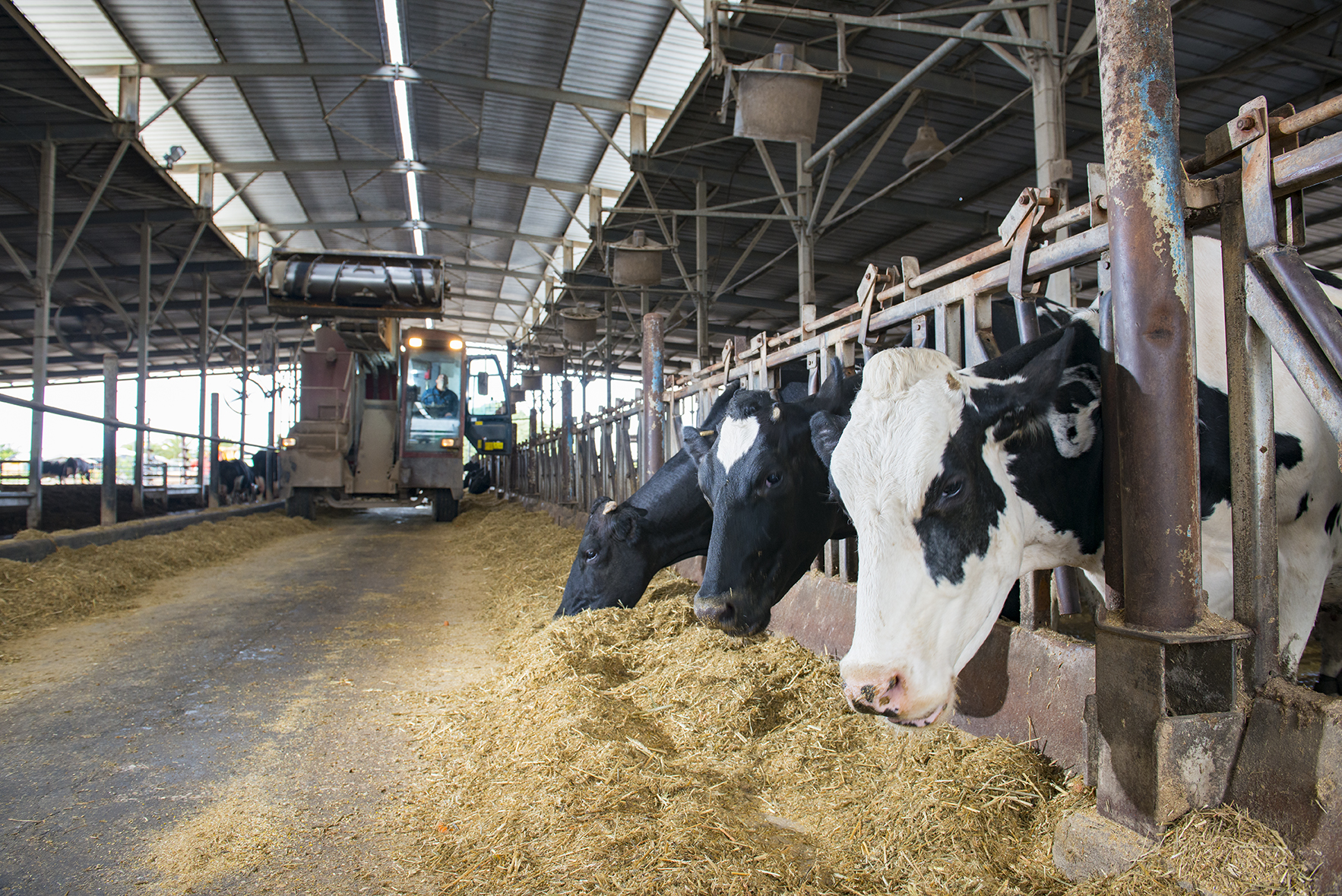
When it comes to dairy cows, maximizing feed intake is the name of the game — and anything that encourages feed intake should be implemented. Some key factors which help maintain feed intake of an acidogenic diet include; feeding a palatable, manufactured anionic supplement, ensuring a minimum of 21 days on the close-up diet: mixing the proper recipe, making sure the ration is adequately mixed and of proper moisture; delivering feed over the entire length of the closeup pen; providing adequate bunk space per cow; frequent feed push-ups; keeping cows comfortable with adequately designed and maintained free-stalls or a bedded pack and ensuring an adequate supply of clean water with the proper amount of drinking space.
Another important consideration is to work with a company and people who have a genuine interest in the success of your operation. Dairy farming is a complex business, and challenges will arise. Having a team of highly trained experts working alongside your team can prove invaluable in helping you reach your goals.



Start with the Right Anion Source
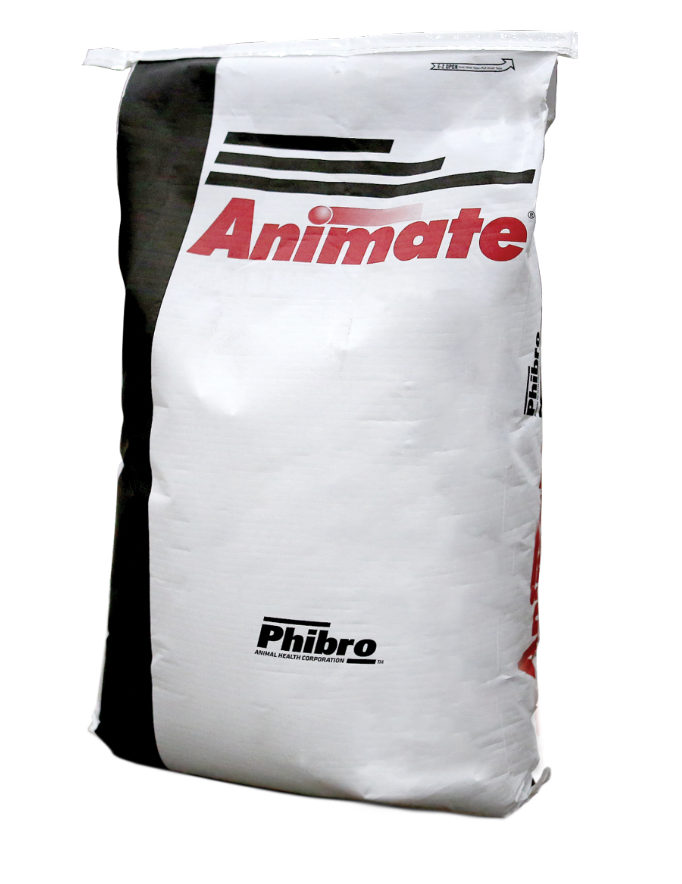
Animate® nutritional specialty product is a unique and patented anionic mineral that has been shown to help keep transition cows healthy and productive.
Learn about Animate